Wednesday, October 3, 2018

Learning to Lament

Facts:
  • More than 60% of sexual assaults (rapes) go unreported. (690 out of 1,000)
  • Of all reported rapes, somewhere between 2% and 10% are later shown to be false reports. 
  • Taking the highest percentage, that means 270 out of 310 reports of sexual assault are true allegations. 
  • Of those 270 rapists accused, only 6 will go to prison. (Thats’ 98% of guilty rapists who walk; only 7 more will be convicted)
  • Those who did not report the rape to police cited a number of reasons for not reporting. (fear, no one will believe me, retaliation, shame, protection of the perpetrator or family, etc.). (More Statistics and Sources Here)

I don’t know if Brett Kavanaugh or Christine Ford are telling the truth. I wasn’t there, nor do I know them. There are plenty of my friends here in Facebookland who are lined up to defend them both. For many, it’s about politics; others couldn’t care less about elephants and donkeys or who sits on the highest court. But the way we’ve treated each other, the way we’ve spoken to and about each other, the disregard we’ve had for victims of abuse whose lives have been destroyed, the flippant attitude we’ve had toward those who’ve had their reputations shattered by false accusation…none of these attitudes and actions look much like Jesus. 

Truth is, I am seeing more and more discussions  that cause us to forget who we are, discussions that cause us to put politics above people. The way we act as Christians often suggests we are more interested, involved and invested in the kingdoms of this world than in the everlasting kingdom. 

Let’s just take this present issue. Not a single one of us knows what happened or didn’t. We do not have personal relationships with either of the people involved. All we know about it, we are either getting from our favorite news outlet (FYI: I quit watching them all years ago) or - even worse - from social media. With little or no real facts, we make up our minds about events, issues, and people. That would be bad enough by itself. But somehow we have developed a mindset that everyone in the world ought to agree with me about everything; if they don’t, they’re stupid. Or ignorant. Or ultra-liberal. Or hyper-conservative. Or unChristian. Or religious nutjobs. Or…well, you get the idea. 
When did we decide that was acceptable human behavior? It shouldn’t just be Jesus followers who are bothered by these personal attacks; all adults should find it distasteful. Oops. See what I did there? I decided for you what you should think about something.  It looks clear from my perspective. But I have to remember, you don’t see the world through the same lens as I do. Further, maybe we need to be reminded that there are times that my mouth just needs to stay shut (or my keyboard needs to fall silent).

Times like the present might be better handled with prayer, with restraint, without judgment, and with faith in a God who is sovereign. Relationships might be better preserved with compassion rather than vitriol. My Christian witness might be more effective if I work to love my neighbor - and even my enemy - as myself. Seems that’s what Jesus thought, anyway. I don’t think he meant for our light to be a burning laser, or for our salt to be rubbed into open wounds. 

Let’s return to where we started. I still don’t know what happened between Mrs. Ford and Mr. Kavanaugh. Likely, none of us will ever know exactly. We will decide - or have already decided - who we believe, and that will inform how we move forward. It is sad, though, what has been revealed about our attitudes toward those who come forward as victims of sexual abuse. I know…we live in a day and age where people will lie about abuse as a part of some political hatchet job. I know…people will lie about abuse as a result of anger, or to get revenge. There are people who will deal with the terrible fallout of falsely accusing someone because money is involved. 

But here’s the thing: unless it involves me or I was there, I really don’t know who is telling the truth. Research (some of which is attached to this article) suggests it is quite rare for people to falsely allege sexual abuse. So, most often, I choose to believe the accuser. Not always, but most often. I feel a deep sympathy for those who have been violated and victimized in this way. I weep at their confessions. 

Unfortunately, there are those who would politicize and weaponize the #MeToo campaign for their own personal agendas. So we become jaded. We make statements about what we would have done in their situations, how we would have reported immediately, how we would have…except we don’t have a clue what we would have done. It wasn’t us. But we give the general impression that we don’t believe people who come forward as victims. Why would we then expect people to come forward, to tell their stories, to share what surely is the most painful, devastating thing that has ever happened to them? If they already know that we - and that our collective society - tends to dismiss victims as liars, it’s surprising that anyone ever tells. 

We sometimes are dismissive because there is a lack of evidence to convict someone. But, often, there is no evidence. Perhaps the assault happened in a private place. Perhaps the perpetrator did not achieve their desired result. Maybe they threatened to kill the victim if police were notified; by the time the victim found the courage to come forward any physical evidence was gone. So maybe all there is to present as evidence is the word of the accuser, with the word of the accused also being heard. See why that’s hard? Maybe if we did a better job of standing with victims, of believing them when they come forward, more might have the courage to do so sooner. And maybe we have some work to do on figuring out how to protect those few innocent people who are accused. I sure don’t know all the answers. 

What’s more, most of what I have said here has been written with adults in mind; we haven’t even talked about the awful specter of sexual abuse of children. There can’t be much that offends a holy God more than this. Perhaps you feel as inadequate as I do to know what to do or how to handle this terrible sin. 

I am reminded of the frequent voice of lament in the Psalms. More often than not, laments - personal and national - do not offer resolution in themselves. They are not Psalms of happy endings. Rather, they sometimes give language to the desperation of the people because of the devastation of sin. They lay bare what the problems are, and they call upon God to do what needs doing. They often include language of repentance. Maybe lament is where we begin to move forward with all this. Maybe we collectively - and OUT LOUD - cry out to God, confessing and professing the state of things regarding sexual sin in our culture. Maybe we lament the brokenness of our justice system that lets so many abusers and rapists walk free. Maybe we offer ourselves in repentance of our silence, repentance of our unwillingness to believe the voices of victims, repentance of our willingness to crucify or vilify someone without knowing the truth, repentance of getting too caught up in politics to grieve the pain of people, repentance of not loving our neighbor as ourselves. Maybe we ask God to help us learn to listen with our hearts, to see as he sees. Maybe we confess that we don’t know what to do, or how to help. Maybe we ask God to break our hearts for this deep brokenness, and ask him to make us instruments of his healing. Maybe we ask God to help us be vigilant protectors of those who are weak, or defenseless, or scared. Maybe our lament includes a cry for the peace of God to wash over the hearts of those who relive their abuse. Yes, we need to lament. 


Wednesday, October 4, 2017

Let's agree...to listen!

These are disagreeable times. It’s as if every corner I turn brings me face-to-face with another argument. And kind of like driving by a police car with the blue lights flashing and someone pulled over, I can’t help looking. I may lean more to one side of the argument than the other, but really I’m just thankful I can drive on by. Thankful that the flashing blue lights are for someone else. Not my monkeys, not my circus. 

Except for those times when the argument is over something about which I feel strongly. Then i cave, throwing my (clearly) well-informed opinion into the fray. On an endorphin-induced high, I sort of hope that someone will disagree with me. That way I can show just how morally- or intellectually-superior I am. I can sound off in defense of [what I believe to be] the truth. Before long I realize that others agree with me, which just emboldens me to argue on.  From behind my screen. With people I’ve never met. 

Image result for disagree

Most of the passionate arguments I witness these days happen in the digital jungle also known as social media. I’m not anti-social media, as clearly I have used it to put these words in front of you. But the rise of virtual communication has caused many of us to lose the art of civil discourse. I log on to my news feed. There I see a person who says something with which I don’t agree. Thinking that person must be delusional, or stupid, or liberal, or an Alabama fan, I click the “unfollow” button. They never know that I have chosen to eliminate their voice from what I hear. And shouldn't I be able to do that? After all, who has to listen to that garbage? Then I scroll down and click “Like” on those statuses that support my view of things. Then I do more unfollowing, then more liking, until I create for myself a cloud-hosted echo chamber. No dissenting voices allowed! Which means I stop listening to anyone who doesn’t already agree with me. Which means I begin to close my mind to new ideas. Which, in turn, causes me to develop a more judgmental spirit toward those who hold opposing views. Which causes me to start seeing people based on the things on which we don't agree, giving them labels and putting them into categories. Which also means I begin to lose sight of the fact that I might be wrong. Because I am right. Right? After all, I have come to believe that being right matters more than the other guy. 

Related image
So maybe I am writing my own internet autobiography, but I'm guessing at least some of you who haven’t clicked away share the same story. (Okay…in truth I know you share this story because I have seen your posts). And it’s an easy one to live out. But it is also part of the reason we cannot get along. We won’t listen to those with whom we disagree. We can’t hear their views. Worse, we cannot hear their voices. 

“America’s Got Talent” is easily one of my family’s favorite shows. If you’ve watched it (or any of the similar shows on TV), you know the format. People perform. Judges judge. Viewers vote. Winners, losers, you know how this works. But I have noticed something [I think] relevant just this season. Sometimes the judges do not agree with each other about someone’s performance. But if a judge dares voice disapproval or criticism, the audience boos. Loudly. Drowning out the judge’s voice. I noticed that even the other judges would join in on this, telling the other judges that they didn't know what they were talking about. It kind of manifests our social-media-oriented way of thinking: you are allowed to think whatever you want, so long as you keep it within the parameters of my own opinion. Do that and we’re good. But dare to disagree with me and I will shut you down. I will boo so loudly that it drowns out your voice. Your experience. Your life. Your intellect. Your pain. Your reasoning. Your opinion. It doesn't matter how you came to your conclusion. It's different than mine [read challenging to mine] so I don't want to hear it. Which makes me wonder why we won’t listen. 

I wonder if we don’t listen because we are afraid. That may sound strange, but it's about all I can come up with. Perhaps we are afraid that our arguments won’t hold up under the scrutiny of someone else. Perhaps we are afraid that we might have to admit we were on the wrong side of something. Perhaps we are afraid that our “friends” will not stay with us if they hear we’ve departed from their talking points. Perhaps the is some other fear I haven’t been able to identify. 

But it is evident - maybe I should say obvious - that our current communication strategies are not working. We have worked so hard to shut out the dissenting voices that we have come to see those people as our enemies. We draw up into battle lines - us versus them. But there is one thing that could radically shift all this. One thing that, if we would all commit to doing it, could bring peace back to our debates and arguments. 

Listen. 

Maybe if we’d try it like this. Find someone who holds a differing position than we do, and ask them why they think, or feel, or believe the way they do. Then we simply shut up and listen. Don’t interrupt. Don’t belittle them. Don’t tell them their view is stupid and they should just abandon it and agree with us. 


Listen. 

Just as each of us has a lifetime of experience that has led us to where we are, so do they. By taking the time to listen, we validate their humanity, their mind, and their worth. It might help to remember that each of us - wherever we may stand on any given issue - is made in the image of God. Doesn't that make someone worth hearing? 

No, they may not change our minds. They may not even say something that is terribly compelling. But taking the time to listen says, “You are actually cared for.” It says to the other person, “You - as a human being, with every experience that has shaped and molded you - have worth and value.” 

This is not necessarily an exercise in agreement. We aren’t always going to 1) understand what someone tells us, or 2) adopt their view. But we will hear them, we will think, we will be challenged, and - at the very least - we will know why they think as they do. 

Image result for quote about listening


It’s fair that I tell you that we may well leave these conversations confused. We may be less sure of what the real issues are than before we started. But we are better for having listened. 

And we may discover that the person to whom we are listening is wrong. They may have drawn their conclusions on misinformation. They may be judgmental. Or biased. Or ignorant. Or angry. Or some combination of all these. Maybe, on some other day, we can discuss how to respond to someone who is wrong. (Note: not someone with whom we disagree, but someone who is actually wrong) 

Some of you reading this are already wondering, “Why should we listen to a bunch of whiny crybabies?” Well, aside from the issues of labeling and name-calling (another day), we might do well to be reminded of what Jesus and other inspired writers had to say. Perhaps these texts speak for themselves. 

Concerning those we believe are our enemies: 
“Love your enemies! Do good to them. Lend to them without expecting to be repaid. Then your reward from heaven will be very great, and you will truly be acting as children of the Most High, for he is kind to those who are unthankful and wicked. You must be compassionate, just as your Father is compassionate. Do not judge others, and you will not be judged. Do not condemn others, or it will all come back against you. Forgive others, and you will be forgiven.” ~Luke 6.35-37 

When we think our thinking makes us superior to others: 
“Then Jesus told this story to some who had great confidence in their own righteousness and scorned everyone else: “Two men went to the Temple to pray. One was a Pharisee, and the other was a despised tax collector. The Pharisee stood by himself and prayed this prayer: ‘I thank you, God, that I am not like other people—cheaters, sinners, adulterers. I’m certainly not like that tax collector! I fast twice a week, and I give you a tenth of my income.’ But the tax collector stood at a distance and dared not even lift his eyes to heaven as he prayed. Instead, he beat his chest in sorrow, saying, ‘O God, be merciful to me, for I am a sinner.’ I tell you, this sinner, not the Pharisee, returned home justified before God. For those who exalt themselves will be humbled, and those who humble themselves will be exalted.” ~Luke 18.9-14

and

“Because of the privilege and authority God has given me, I give each of you this warning: Don’t think you are better than you really are. Be honest in your evaluation of yourselves, measuring yourselves by the faith God has given us.” ~Romans 12.3

Image result for romans 12 3

Concerning the attitude of Christians to others:
“Is there any encouragement from belonging to Christ? Any comfort from his love? Any fellowship together in the Spirit? Are your hearts tender and compassionate? Then make me truly happy by agreeing wholeheartedly with each other, loving one another, and working together with one mind and purpose. Don’t be selfish; don’t try to impress others. Be humble, thinking of others as better than yourselves. Don’t look out only for your own interests, but take an interest in others, too. You must have the same attitude that Christ Jesus had.” ~Philippians 2.1-5

Included among Paul’s instructions to believers living in trying times under heathen governments: 
“They must not slander anyone and must avoid quarreling. Instead, they should be gentle and show true humility to everyone.” ~Titus 3.2

What do these Bible texts have in common? Are they at least relevant to the present time. Here’s what I see (while not wishing to rip any of these words completely from their contexts): 


  • Our enemies - if we have any real enemies - are to be loved and treated with compassion, not condemnation.


  • Whoever we are, we cannot think that we are more important than anyone else. In fact, the way to be more like Christ is to actually treat others (yes, even those with whom we disagree) as more important than ourselves.


  • If we are seeking to be rewarded by treating people the way we are supposed to treat them, that may have to wait.


  • Humble pie doesn’t usually taste scrumptious, but it is sure better for us than other things we could eat. 


  • As believers, we have a divine obligation to take a genuine interest in others.


  • It is hard to be humble and argue with people. To argue means that I think my way of thinking is superior to yours. By my own standard of measure it may be. But do you see how easily we go from “my way of thinking is better” to “I am better?” That’s counterproductive to humility. 

And if none of that is very convincing, how about these two simple (gut-punching) gems:

“Understand this, my dear brothers and sisters: You must all be quick to listen, slow to speak, and slow to get angry.”  ~James 1.19

Related image

“Even fools are thought wise when they keep silent; with their mouths shut, they seem intelligent.” ~Proverbs 17.28

Translation: Hush, and take time to listen to the other person. Don’t get mad when what they say doesn't agree with our thinking. And opening our mouths to say what may be bypassing our filters might well make us look more foolish than listening. 

Navigating these troubled days is not easy. But our inability (or unwillingness) to listen to someone with whom we disagree is only making it worse. Let’s stop assuming we're always right. Let’s close our argumentative mouths and listen. Let’s engage without hostility. Let’s have dialogue that moves us toward understanding each other. 

Oh, and one last thing…this works best when we are face-to-face with another human. Let’s get out from behind our televisions, our tablets, our phones, and our computers. Let’s sit down at the table with real people. 

And listen. 

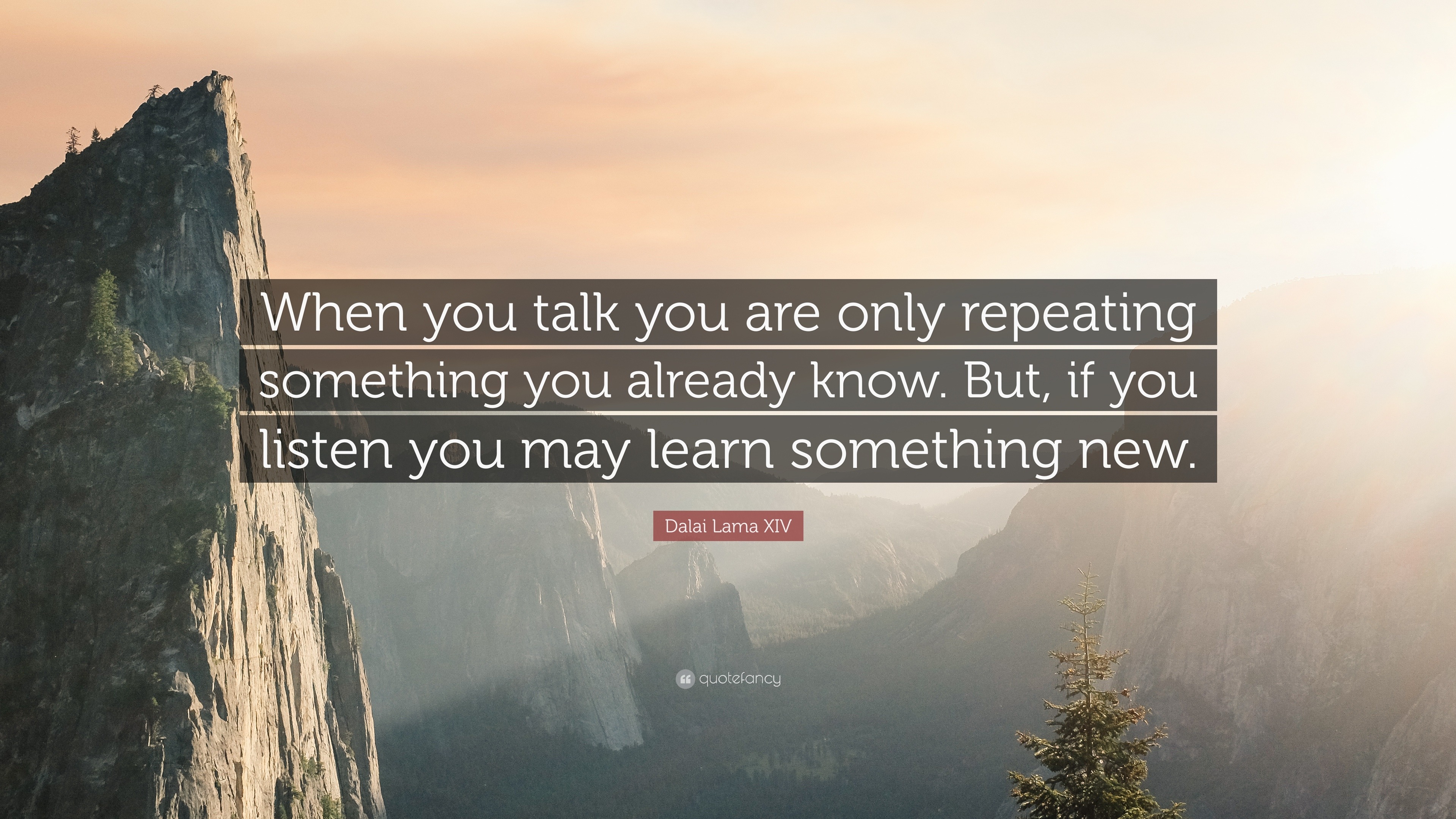
We just might learn something. 

Image result for when you listen dalai lama

Saturday, July 30, 2016

Redemption: A Colorful Legacy, A Bright Future

I love when irony and history collide.

My son and his teammates are preparing to play in the Dixie Youth Baseball World Series in Laurel, Mississippi. Until last year, I had never heard of Dixie Youth. In other towns – and even in Lebanon – we had participated in both the Little League and Cal Ripken baseball organizations. So when we transitioned into DYB, I just assumed it was an alternative to the other youth baseball programs. My curiosity eventually got the best of me, and I started researching the history of Dixie Youth. Turns out, the history of Dixie Youth is, well, less than colorful.


Not everyone in America thought the official integration of Little League Baseball was a good thing. That was particularly true of those who thought their light-skinned sons might lose in championship tournaments to darker-skinned counterparts. So, in 1955, a group of teams in South Carolina left Little League and formed the all-white Little Boys Baseball. In just a few years, the league changed its name to Dixie Youth Baseball, choosing the Confederate Battle Flag as the background for their official logo.

DYB grew quickly in the Deep South in the racially-charged late 1950s and 1960s, evidence of the distaste that many whites had for integration. Thankfully, Dixie Youth would eventually change the “rules” of their organization, allowing players of all ethnicities – and even girls – to play baseball together. Legendary athletes Michael Jordan and Bo Jackson came up through Dixie Youth teams.


Today, almost a half-million kids throughout 11 states play Dixie Youth baseball with no knowledge of the actions and attitudes that stain its past. My son’s team is made up of 12 young men ages 11-12; one-third of that team is made up of minorities – three boys are from an African-American background, one is the child of Mexican immigrants. None of those boys could have played in DYB in the early days. Yet, in just a few days, they will be facing the Team Texas in the opening round of the Dixie Youth World Series.

The irony doesn’t end there, however. Just last week our boys received a very special invitation. Sunday July 31 marks the annual gathering celebrating the legendary Lebanon Clowns. You may not recognize their name, but they are an important piece of the tapestry of baseball history. You see, the ranks of professional baseball were as closed to minority players as Dixie Youth Baseball. So black players formed their own professional baseball organizations, with the two largest eventually known as the Negro National League and the Negro American League. Enter the Lebanon Clowns, a team of players based out of Lebanon, Tennessee who were as talented as any others, but not allowed to play in the white-only MLB. The Negro League had amazing athletes who travelled the country in cities that would allow them to play, staying in the few establishments that were not closed to blacks. Still recognized are names like Satchel Paige, Roy Campanella, the all-time home run king Josh Gibson, and even Jack Roosevelt Robinson (who would break the color barrier in big league ball).


The surviving members and families of the Lebanon Clowns have invited the Lebanon All Stars to join them Sunday at their reunion for a meet-and-greet and to be recognized for their achievements. Do you see the irony? A fully-integrated Dixie Youth Baseball team joining in an event celebrating stars from the Negro League…what a glorious tribute to where we’ve been and where we’ve come.


At a time when so much attention is being given to division and racism, I rejoice that our boys’ lives can transcend the color of their skin. I am thankful that black boys and white boys and Asian boys and Mexican boys can find unity in doing what they love…playing baseball – TOGETHER. I think the World Series will be an amazing experience. But I hope one day they can appreciate just as much their time with the Lebanon Clowns, and all that is represented by this meeting. Maybe, in some way, this day is about REDEMPTION, about taking something not-so-good and redeeming it into something better. Isn't that sort of what God does with all of us? This meeting and the present circumstances around it need not be focused on the negative elements of history. That doesn't mean there isn't meaning in the history; rather, we are given the opportunity to redeem a shameful piece of our past.

History is NOT bound to repeat itself; there is hope for the world into which these boys are leading us. 


Thursday, July 12, 2012

Reflections on my last days in Fresno...

To my dear Woodward Park family,

The temperature is in the mid-seventies and it is gently raining. I am sitting on the front porch of some friends' house (yes, in a porch swing) and I am watching four wild turkeys chasing each other across a green field.

Even with all this, it is difficult to believe that my family is in Tennessee to stay.

Even though Dana and I spent several days packing up our house and three more days loading the moving truck, the whole thing was very surreal, almost like we were just getting ready for a vacation.

Yet as I write these words, I realize that my tenure as the preaching minister for Woodward Park has come to a close.

The last few weeks have really been a whirlwind; a trip to Tennessee, a trip to Oregon, a week at YBC...it still makes my head spin to think about it. Yet there are some things that really stand out in our last few days in Fresno.
  • The awsome sight of a whole family being baptized together in the YBC pool
  • Experiencing my first baptism hidden by a castle, where I heard it rather than saw it 
  • Having fresh tongue tacos delivered to my house (yes, tongue)
  • Sharing midnight feasts of cold tri-tip and large amounts of leftover bacon in the dining hall
  • Receiving a "family set" of quilts, stitched with love
More than these things, however, the thing that is most special is the time I spent with dear friends whose last act of service was to pray over us. Yes, we talked about moving. We talked about ministry. We talked about memories. But the last thing you wanted to do for us was to speak to God and ask his blessing on us. I had a 93-year-old man tell me through tears that he had never stopped praying for me and my family. In a real way, that defines our time in Fresno; Godly people who loved us with the Love of the Lord.

As we begin our work with the Maple Hill church, I want you to know that we will never be the same because of our time with you. You have helped us to be closer to the Lord than ever before. You helped restore my love for ministry. You provided exactly what my family needed. You lived Christ in front of us. You taught us, even (or especially) when you did not know you were teaching. And you loved us from the first day you met us.

I was so moved by your acts of kindness and service. You literally took care of us til our very last day in town. We will always love you, and pray God's richest blessings on you.  We will continue to be in prayer for you. And I know without asking that you will keep on lifting us up before God as well.

Until we meet again...

Sunday, January 29, 2012

So we could see the power of God!

When he was born, doctors did not believe he would live long. Just thirty years before, his lifespan would have been estimated at nine years. As late as the 1980s, it would have been thought to be 25 years. Of course, standard treatment at the time was institutionalization. But his parents refused such a supposed solution, choosing instead to raise their son in the community of a large family. And rather than nine or 25, our family was blessed by Kenny Hatch for 57 years.

Kenny was born with Down's Syndrome, though at the time of his birth the cause of Down's was yet undiscovered. It would be about four years before scientists would find an extra chromosome that seemed to trigger the syndrome. Ironically, medicine has been unable to answer why it happens.

When he was young, Uncle James and Aunt Nell enrolled Kenny in school. It would not take them long, however, to discover that public education was not prepared to deal with a child like Kenny, and they were forced to bring him home. It is a shame that we do things like that, especially when we fear what we do not understand.

But I would not know him until several years later. You see, he was 21 years old when I was born. I guess that means I have known him for my whole life. As a child, I knew Kenny was different, though I did not really know why. I knew that he talked a little funny, and eventually realized that he was built a little differently. But I did not grow up seeing Kenny as someone with a disability or a handicap. I just knew him as my cousin. (Technically he was my "second" cousin, but in the south that "second" business doesn't mean anything)

My first memories of Kenny are as a working man. He was fortunate to be involved in a vocational center for adults with disabilities. It gave him purpose, it gave him a little money, and it became a social outlet for him. Social outlet is just code for "it was a place where he met girls that would become his girlfriend." In that environment, Kenny was not different. He was normal. Accepted.

He played the harmonica, maybe as good as Charlie McCoy. Well, that might be stretching it a little. Maybe it was just that he enjoyed it so much that, even if it was a little less-than-perfect, it sounded sweet.

And he smiled. Boy, did he ever! That's not to say that he was never in a bad mood, and the last few years brought their share of uncomfortable days. He could be stubborn as a mule. But he smiled a smile that would literally melt away the selfishness from your heart.

It could not have been easy for Uncle James and Aunt Nell, raising Kenny in the society of their day. Common thought was to just put him away somewhere and forget him. As bad as that may sound, common thought today is to find out about the Down's early in the pregnancy and just kill the baby before it is born. Some advance, huh? It is dressed up with the name "Selective Therapeutic Abortion," but statistics suggest that some 80 percent of women terminate their pregnancy when a diagnosis of Down's is discovered. Wow. I shudder to think of that. And it saddens me to think of what we would have missed without Kenny.

I feel compelled to tell you that Aunt Nell was a faithful caregiver to Kenny. What to some would seem a burden was just life for her. Well meaning people will say dumb things to her in days to come about this being a load off of her. Maybe those people's tongues will cleave to the roof of their mouths.

I don't know if she or Uncle James ever asked why this had happened to them, or to their son. I never asked her that. But it seems almost inevitable. That reminds me of a young man who was born blind. Jesus' followers wanted to know why. In that case, they  assumed that such an impairment was punishment for sin. They just couldn't figure out who had sinned. But Jesus had a different take on it. He told them, "This happened so the power of God could be seen in him" (John 9.3). I think that's the truth about Kenny, too. Our eyes look at Kenny and wonder if there was some great mistake somewhere. How can God's power be on display in someone born with physical problems and health issues that accompany Down's.  And then we are reminded that God's strength is made perfect in human weakness (2 Corinthians 12.9). And I can tell you where I saw that power in the life of Kenny Hatch.

He loved you, no matter who you were. He loved without reservation, and would hug you, kiss you, wink at you, or smile at you. And you could not be in his presence without feeling that. Such affectionate love is rare in our world. Many people we know only love you for what they can get in return. Kenny didn't ask for anything. That is the power of God who, himself, is love.

Tonight, Kenny was overcome by complications of pneumonia and died. Kenny, whose faith we all knew, was ready. I have to think that somehow, on some level, he was more connected to God than we understood. And part of me thinks that in heaven Kenny will be free from the syndrome that defined his earthly existence. But there's part of that line of thought that troubles me. Not the part about going to heaven, but the part that somehow he has to be different in the eternal presence of God. We think of God as a healer. But I have to stop and ask if Kenny was really the one who was broken. Maybe, with his child-like view of the world, he was a lot closer to what I am supposed to be. After all, I don't believe in chance. I believe in a God who is always in control. I believe in a God who has a purpose for everyone who is created. I believe that Kenny was created in God's image. So maybe, just maybe, what I thought was a disability was really just God's power being perfected in Kenny's weakness. Does he really have to be "healed" to be in heaven? Paul's thorn in the flesh was about trusting God. And in looking at Kenny, maybe he was perfect for reminding us of the same lesson. God's way of saying, "Even if you don't understand this, I am still God. I've got this."

Perhaps the lesson from Kenny's life is that normal is overrated. Maybe it's that perfect doesn't exist, so I can choose to praise God for the life I have or be miserable over what I don't have. Maybe it was my need to be happy with less, to be content. Or maybe, all of the above.

Whatever the case, I am grateful to God that my life was intersected by Kenny's. I am thankful that he helped me see others with Down's as someone to be celebrated, not pitied. I am thankful that my family treated Kenny like just another one of the cousins.  I am thankful that James and Nell didn't give up. And I am thankful to have been loved by so beautiful a soul.

Rest well, cousin Kenny.

Monday, January 23, 2012

Loose teeth...and repentance?

My son, Samuel, had a loose tooth. It wasn't his first, though I don't remember how many teeth he has lost in eight years of living. But here's the thing: Samuel has never really pulled a tooth. He is one of those kids who will leave that tooth in his mouth until it falls out on its own.

That may not sound like a problem, yet it creates a problem. You see, teeth that are almost out have very sharp edges. They hurt when they poke around on the surrounding gums, thus eating or drinking can become quite a painful experience.

Case in point, our family went out to eat Sunday at Olive Garden (courtesy of some sweet ladies from WP). Sam's tooth was hanging by a thread, but he would not pull it out. Consequence? He did not get to eat. What was frustrating about this was that Dana and I both offered to pull the tooth, and did our best to convince Sam that there would be little or no pain involved. He believed otherwise. So while we enjoyed our endless stream of soup, salad and breadsticks, he sat mopingly (is that even a word?) with a cooling bowl of Zuppa Toscana in front of him. No amount of encouragement or threatening could get that tooth out. He knew that he couldn't eat. He knew that it was hurting. Yet, he insisted on keeping his mouth closed and preserving the position of that lateral incisor.

I will admit to being more than a little frustrated with Sam. Granted, we were using a gift card to pay for dinner, but we paid for him to eat. Because of his refusal to pull the tooth, we just threw that money away. But more than that, it was frustrating to see him hurting himself when there was a simple solution to the problem. He didn't have to hurt, and he knew it, but just wouldn't do what was necessary to stop the pain. I think it was frustrating, too, because it wasn't his first tooth to lose. He has been through this EXACT scenario several times already. He KNOWS it hurts more to leave the tooth in place than to get it out.

Then my frustration turned to embarrassed humility.

It dawned on me that God must get just as frustrated with me when I stubbornly refuse to let him remove things from my life that are hurting me. You could take your pick of damaging habits, attitudes or actions and I have probably struggled with them. All of them are things that God could deal with, things that his power could defeat. But I decide that going through that personal detox will be more painful than the torment caused by my sin, so I hang on to it just a little bit longer. Only with my sin, it is much more dangerous than causing me to miss one of my favorite meals. Unlike a loose tooth, the problem areas in my life will not just fall out on their own. The will linger forever unless they are intentionally removed. Further, they carry a much higher price tag...they are fatal (Romans 6.23). And I KNOW that, yet I let those things hang around, hurting me (and those around me). I think, over time, I get calloused enough that I don't really feel the pain any more. Pretty frightening, huh?

That's what I think David experienced in the Bathsheba incident. No doubt, he knew that sleeping with the wife of one of his soldiers was not good. I am certain that he knew that covering their affair with murder was wrong. In fact, he would go on to write in Psalm 51 that it was eating away at him, destroying him. Only after Nathan's confrontation did David turn in repentance, essentially pulling the loose tooth.  His prayer was for God to tear out his old heart and give him a new one. I think he knew that the spiritual procedure of such an operation would be just as drastic, as life-altering as if it were a physical surgery. And he can do the same for you.

Interestingly enough, Samuel announced from the backseat of the car driving home from Olive Garden that the tooth was out. And as soon as we got home, he fixed himself something to eat. Funny how that relief works. The pain is gone, and joy (that's what I saw in his eyes over that bologna sandwich) takes its place.

Father, thank you for dealing with my sin, for removing things from my life that need to go. Please forgive me for my stubborn refusal to let go of sin. Soften my heart so that it feels the pain again. If necessary, just tear out my old heart and create a new one in me. Help me let go of myself while holding on to you. In Jesus' name, Amen

Tuesday, January 10, 2012

Unplugged...sort of


The first time it happened, it was because we had moved from one house to another. If you have ever moved, you know that it is not always a well-oiled machine. Things get lost, or misplaced, or forgotten. Besides all the stuff that has to be boxed-up and relocated, there are also lots of necessary chores, like having electrical service turned on and off.

In the midst of the chaos of one of our moves, we (meaning "I") forgot to have the cable service switched. So we were without television programming for a time. The first few days were rough, but we soon discovered just how much time we had been spending parked in front of the box. And as more days went by, we got to the point that we rather enjoyed the quiet time it afforded our family.

Then we moved to California. And like all good movers, we took advantage of the stupendous savings (what a joke!) offered in a cable provider's bundle. Right back into the TV culture we went, and it immediately changed things around our house. We eventually found ourselves planning our schedule around what we wanted to watch. The kids soon believed that they HAD to watch their shows in the morning as we were trying to get ready. And little time was spent in actual conversation.

After a few months, we deliberately made the decision to turn off the cable. No more network news, no more ESPN, no more Disney channel. And a remarkable thing happened. We started playing more games with our kids. We actually learned to have some quiet time in the evenings. And we have not looked back. Now, I need to be clear about something. We do have a subscription to Netflix that allows movies and old tv shows to be streamed through our Wii console. If we want to watch a movie, we can. If we really want to re-watch an episode of favorite shows gone by, we do. But we have complete control over the programming. We only watch (or let our kids watch) those things that we screen first. No commercials compelling our kids to want whatever junk is being advertised. No keeping up with all the Hollywood gossip. No trash that can poison their minds. And we couldn't be happier about that.
I was a little worried when football season rolled around. No games at all? No SEC? Nothing from the NFL? Over the course of this season, however, I realized just how un-important that really was.

Probably the most startling reality for me is the influence that the voices on TV had on my mind. I had the same experience with the radio. On September 12, 2001 I turned on talk radio for the first time. At the time I was just looking for news coverage of the previous day's horrible events. But I liked what I heard. Somewhere around 8 years later, I turned off the talk. I found that things of a political nature had taken an unhlealthy hold on my mind. They consumed me. And, frankly, they fed an arrogance that was horrible. Though God long-ago said that my citizenship is in heaven, I was obsessed with the affairs of my earthly country. Then I turned it off.

I was amazed how all those pressing issues became un-important over the days and weeks that followed. In fact, I was soon disgusted with the whole political mess. Still am today. But I don't get so caught up in it anymore.

As a side note, our family's listening habits changed, too. In the car, country music was the norm. But with this shift in my listening, we decided that a family shift would be good. So we began to listen to nothing but Christian music. Changed the car radio, alarm clocks, etc. Again, it was amazing to watch the transformation that took place. Instead of boozing, cheating, lying songs, I started hearing my kids randomly singing about God, grace, love, Christ and the gospel. Our conversations started to flow from those songs. And the whole tone of our daily life began to change. Now, our kids wake up in the morning to songs about the God who loves them, about the Savior who died for them. That is what we are "feeding" their minds now. And I can't tell you the difference it has made.

My point? That all TV programming is bad? You can only go to heaven if you listen to Christian music? No. But I pray that you, too, will give serious thought to what you are allowing into the eyes, ears and minds of your children. I pray that the things they see and hear, watch and are entertained by are things that honor God and help them learn to glorify him. If you are struggling with that, try unplugging like we did. Try changing the station. Remember Jesus' words in Matthew 6.33: "Seek first God's kingdom and his righteousness." Do that with your entertainment, and you will be amazed at the difference it makes.